

Looking to finance a franchise? This guide explains how. We cover SBA loans, CSBFP loans, personal savings, and more to help you find the best funding options. Get started now to make an informed choice.
Key Takeaways
Various financing options are available for franchisees in North America, including SBA loans, CSBFP loans, conventional bank loans, franchisor financing, credit unions, and alternative lenders.
SBA loans are popular due to their favorable terms and competitive rates, but require a minimum credit score and thorough documentation, while conventional loans offer structured terms but often require collateral.
A solid business plan is essential for securing financing, as it outlines objectives and strategies, and helps avoid common mistakes like inadequate market analysis and overextending budgets.
Understanding Franchise Financing Options
Franchise financing encompasses the methods franchisees use to cover initial franchise fees and startup costs. The landscape of financing options is vast and varied, catering to different needs and circumstances of prospective franchisees. Whether you’re looking for government-backed loans or innovative fintech solutions, there’s a financing strategy out there for you.
Each financing option comes with its own unique benefits and requirements. For instance, SBA loans offer competitive rates but come with stringent eligibility criteria, while conventional bank loans may provide structured terms but require solid credit history and collateral. The choice of financing should align with your business goals and financial situation.
From SBA loans to equity investors, each type of financing comes with its own set of benefits and challenges. Thoroughly understanding these options helps in making informed decisions that align with your franchise ownership aspirations. We will start by exploring SBA loans in detail.
Small Business Administration (SBA) Loans
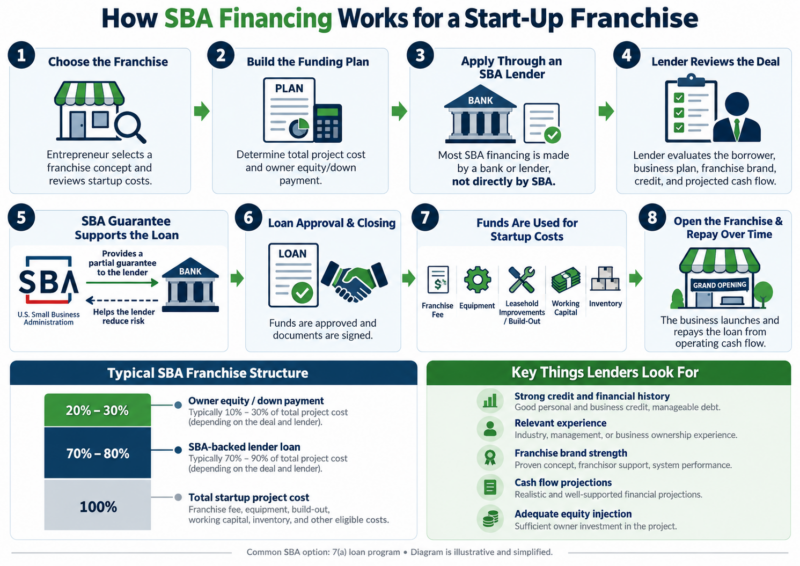
SBA loans, supported by the federal government, present more favorable rates and terms compared to conventional loans. For franchisees, SBA loans are a popular choice due to their competitive interest rates and flexible repayment terms. These loans can be used for various purposes, including working capital, equipment, and real estate.
To qualify for an sba loan, borrowers typically need a credit score of at least 690 and must provide comprehensive documentation, including a detailed business plan and financial statements. The SBA 7(a) loans offer competitive interest rates ranging from 2.25% to 4.75%, and borrowers can access up to $5 million. Additionally, these loans often require no collateral for amounts under $25,000.
While SBA loans are an excellent option, they do come with certain eligibility criteria. Franchisors that maintain significant control over operations are generally not eligible for SBA funding. Despite these requirements, approximately 10% of SBA loans are allocated for franchises, showcasing the opportunities available through these loans.
Canadian Small Business Financing Program (CSBFP)
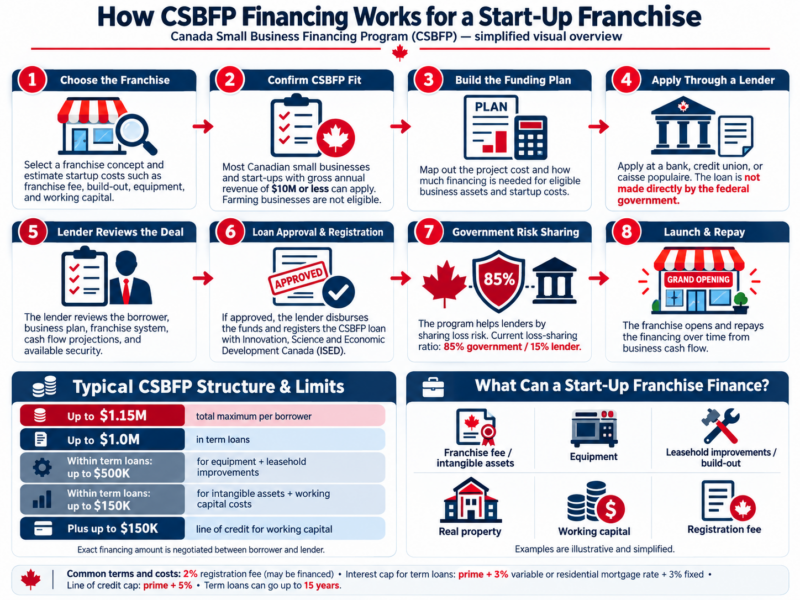
For a start-up franchise, the CSBFP can be particularly useful because it can finance many of the major costs associated with opening a location. Eligible term-loan uses can include commercial real estate, equipment, leasehold improvements and build-out, franchise fees and other intangible assets, and certain working-capital costs. The program also provides a separate line-of-credit option for working capital and day-to-day operating expenses.
The maximum financing available is currently $1.15 million per borrower. This consists of up to $1 million in term loans, plus up to $150,000 through a line of credit. Within the $1 million term-loan limit, a maximum of $500,000 can be used for purposes other than purchasing or improving owned real property, such as equipment and leasehold improvements. Within that $500,000 amount, up to $150,000 may be used for intangible assets and working capital. The actual amount a business receives is negotiated with the lender and can be substantially less than the program maximum.
There is a 2% CSBFP registration fee, calculated on the amount financed or authorized, which may itself be included in the financing. For term loans, the maximum floating interest rate is the lender’s prime rate + 3%; fixed-rate financing is capped at the lender’s applicable single-family residential mortgage rate + 3%. Lines of credit are capped at prime + 5%. Term loans can generally have terms of up to 15 years, depending on the assets and lender structure.
Conventional Bank Loans
Conventional bank loans are a tried-and-true method for franchise financing. A solid credit score and a comprehensive business plan are typically required for approval. Lenders will assess your credit history, net worth, and may require collateral as part of the loan security. Securing financing necessitates a well-structured business plan, incorporating market analysis, operational plans, and financial requirements.
Most banks offer loans specifically for franchises, which can significantly increase your chances of obtaining financing. Applying with banks experienced in franchises can improve the likelihood of loan approval. Known for their competitive rates and structured terms, traditional bank loans can provide full ownership to the franchisee.
However, there are challenges to consider. One drawback of conventional loans compared to SBA loans is that they typically have shorter terms, leading to potentially higher payments. Securing conventional bank loans for startups can be challenging. This is often due to their lack of a proven financial track record.
Franchisor Financing Programs
Franchisors often offer financing programs directly or through partnerships with preferred lenders, making it easier for franchisees to obtain loans. These programs are designed to help new franchise owners overcome the initial financial hurdles and can be tailored to the specific needs of the franchise business. Some franchisors have specific lenders on their approved list to assist franchisees in securing funding.
To qualify for franchisor financing, franchisees often need to demonstrate a positive net worth and may be required to provide a personal net worth statement. This ensures that the franchisee has the financial stability required to run the business successfully. These programs are often streamlined to suit the operational needs of the franchise, making them a convenient option.
Although beneficial, it is important to thoroughly review the terms and conditions of franchisor financing. Understanding the repayment terms and any potential restrictions is crucial before committing to this financing option.
Using Personal Assets for Franchise Financing
Using personal assets to finance a franchise can be a viable option, but it also poses significant risks to your personal financial security. Personal savings, home equity, and borrowing from friends or family are common ways to support franchise financing. However, investing personal assets can jeopardize your financial stability if the business does not succeed.
Lenders typically expect franchisees to contribute 10 to 30% of the total franchise investment from personal funds. This personal investment reduces the lender’s risk and demonstrates your commitment to the business. Leveraging home equity can provide substantial funds but poses risks to personal assets. Additionally, borrowing from friends or family can provide necessary funds but may harm personal relationships if the business fails.
Utilizing securities-backed credit lines lets you borrow against your investment portfolio without selling assets. Using personal assets can be effective, but it is vital to weigh the potential risks and benefits carefully. Next, we will consider the role of equity investors and business partners in franchise financing.
Equity Investors and Business Partners
Equity investors and business partners can be valuable sources of funding, providing capital without the need for large upfront costs. Partnering with equity investors often involves sharing ownership and profits, which can be a significant downside. However, equity investors can also bring valuable business acumen and strategic guidance, enhancing the franchise’s chances of success.
A comprehensive business plan is crucial when seeking equity investors, as it demonstrates the franchise’s viability and details how funds will be utilized. While equity financing can be more expensive than bank loans due to profit sharing, it does not require credit checks or collateral, making it accessible for those with limited credit history.
The biggest risk with equity investors is the potential for significant breakup costs if the partnership does not work out. Finding the right partner whose goals align with yours is crucial to avoid conflicts later on.
We will now discuss another creative financing option: Rollover as Business Startups (ROBS) accounts.
Credit Unions and Alternative Lenders
Credit unions generally provide more favorable interest rates and flexible lending terms compared to traditional banks. Qualification for a business loan from a credit union requires meeting membership criteria, which can vary based on geography, occupation, or organizational affiliation. Membership in a credit union is often required to access their business loans, as they typically tailor their services to specific groups or communities.
Alternative lenders often have quicker approval processes but may charge higher interest rates than traditional lenders. These lenders focus on community engagement, making them more approachable for aspiring franchise owners who may struggle to secure loans from conventional banks. Alternative lenders may offer unique financing options, including creative solutions tailored to the needs of franchisees.
Comparing the rates and terms offered by credit unions and alternative lenders to traditional banks can provide a broader perspective on available financing options. Next, we will discuss some common franchise financing mistakes to avoid.
Rollover as Business Startups (ROBS) Accounts
Rollovers for Business Startups (ROBS) allow individuals to use their retirement savings to fund a business without penalties. This financing option enables franchisees to invest 401(k) funds into their franchise, bypassing immediate tax penalties. However, it carries significant risks if not executed properly.
One of the main advantages of ROBS is that it does not require credit checks or lender approval, making it accessible for those with limited credit history. Despite its benefits, there is a significant loss of retirement savings if the franchise fails. Therefore, thoroughly understanding the process and complying with IRS regulations is crucial to avoid potential issues.
While ROBS can be a powerful tool for financing a franchise, it’s essential to consider the long-term implications on your retirement funds. Next, we will move on to the importance of preparing a detailed business plan.
Preparing a Detailed Business Plan
A detailed business plan is essential for securing financing and acts as a roadmap for your franchise. It outlines business objectives, strategies, and operational frameworks, which are critical for success. Incorporating risk assessments and contingency plans helps identify potential challenges and prepares the franchise to face them.
Inadequate financial planning may lead to overextending budgets, jeopardizing franchise ownership. Selecting a suboptimal location without proper market analysis can severely impact business success. Attempting rapid expansion without adequate resources and management can lead to operational failures.
Equity investors may provide both capital and strategic guidance, enhancing the business’s chances of success. However, equity financing can lead to a dilution of control for franchise owners, as partners may want a say in business decisions.
Preparing a solid business plan is a crucial step in securing funding and ensuring the long-term success of your franchise. We will now explore credit unions and alternative lenders as financing options.
Summary
Securing financing for your franchise is a critical step in achieving your entrepreneurial dreams. From understanding various financing options to preparing a detailed business plan and avoiding common mistakes, this guide has covered the essential aspects of franchise financing. By thoroughly understanding and considering each financing strategy, you can make informed decisions that align with your business goals and financial situation.
As you embark on your journey of franchise ownership, remember that the right financing strategy can make all the difference. Take the time to research, plan, and choose the best financing options for your unique circumstances. With careful planning and execution, your dream of owning a successful franchise can become a reality.